
NEUTRON DESIGN SYSTEM
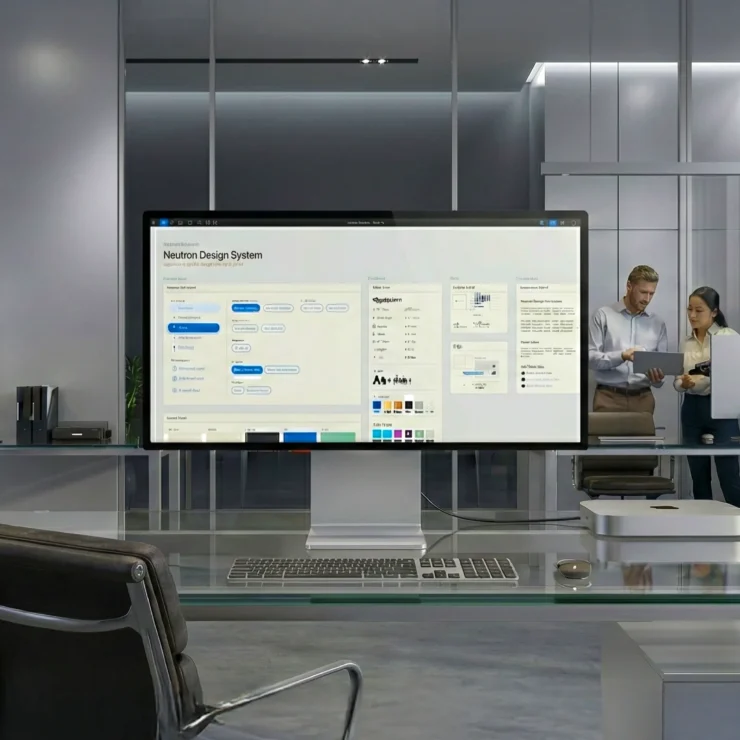
Neutron Design System
Project Overview
Executive Summary
When I joined HCA Healthcare, Neutron already existed as an early-stage design system built in Sketch. While it provided an initial foundation for interface consistency, the component library was limited in scope and no longer aligned with the organization's growing product ecosystem or its transition to Figma.
As enterprise applications expanded across multiple clinical and operational domains, product teams required a scalable design system capable of supporting modern workflows, accessibility standards, and efficient collaboration between design and engineering.
The result was a mature enterprise design system that became the shared design foundation for more than 15 product teams, improving consistency, reducing duplicated design effort, and strengthening collaboration throughout the product development lifecycle.
An Early Design System Had Reached Its Limits
Neutron had been introduced as a Sketch library to promote consistency across products, but as HCA Healthcare's digital ecosystem continued to grow, its limitations became increasingly apparent.
The existing library contained only a small number of reusable components and lacked many of the interaction patterns required across enterprise healthcare applications. At the same time, the design organization was transitioning from Sketch to Figma, creating an opportunity to rethink—not simply migrate—the design system.
The challenge was to transform a limited component library into a scalable enterprise platform capable of supporting multiple product teams while improving collaboration between design and engineering.
Business Objectives
The project focused on five strategic objectives.
Expand the Design System
Identify missing UI patterns and build reusable enterprise components.
Standardize User Experience
Create consistent interaction patterns across healthcare applications.
Improve Collaboration
Align designers and engineers around a shared design language.
Support Scalability
Build a system capable of evolving alongside HCA Healthcare's expanding product ecosystem.
Modernize Design Operations
Leverage Figma's collaborative capabilities to improve design workflows and component management.
My Role
As UX Design Lead, I led the evolution of the Neutron Design System from an early Sketch library into a scalable enterprise design system. My responsibilities included:
Responsibilities
Project Evolution
Understanding the Existing System
Before creating new components, I conducted a comprehensive audit of both the existing Sketch library and enterprise healthcare products.
The objective was to understand:
- Which components already existed
- Which interaction patterns were duplicated
- Which UI elements were missing
- Which workflows required standardization
- Which components could become reusable building blocks
Enterprise Audit
The audit revealed significant opportunities for improvement.
Fragmented Components
Different products implemented similar interface patterns in different ways.
Limited Coverage
Many commonly used healthcare workflows lacked reusable components.
Inconsistent Interaction Patterns
Buttons, tables, forms, filters, and navigation behaved differently across applications.
Growing Technical Debt
Without reusable components, teams repeatedly solved the same design problems.
Design Approach
The project followed a structured enterprise design system workflow to ensure a seamless transition and scalable outcome.
Audit Existing Products
Reviewed enterprise applications to identify reusable patterns and missing components.
Establish Design Foundations
Created typography, spacing, colour, elevation, iconography, and grid foundations using design tokens.
Build Components
Expanded the library with reusable components designed using Atomic Design methodology.
Prototype & Validate
Created interactive prototypes to validate behaviour, usability, and implementation.
Document
Produced comprehensive documentation, specifications, and usage guidelines.
Collaborate
Worked closely with front-end engineers to ensure component consistency between design and implementation.
Design Foundations
The migration provided an opportunity to modernize the visual language rather than simply recreate existing assets. These foundations became the building blocks for every reusable component.
Design Tokens
To improve scalability and consistency, Neutron adopted a token-based architecture. This approach simplified maintenance while allowing updates to propagate consistently throughout the system.
Component Architecture
Using Atomic Design methodology, the library was expanded into reusable layers, ensuring structured scalability from foundational elements to complete application views.
The Component Library
The library included a comprehensive suite of UI elements optimized for data-dense clinical and operational environments.
Leveraging Modern Figma
Rather than recreating Sketch assets, Neutron was rebuilt using Figma's collaborative capabilities. This significantly improved collaboration between designers while simplifying maintenance.
Key techniques included:
Documentation
A design system succeeds only when people understand how to use it. This enabled consistent adoption across product teams.
Documentation included:
Design Governance
To ensure long-term sustainability, the project introduced a governance process. This ensured Neutron continued to evolve without sacrificing consistency.
Engineering Collaboration
Close collaboration with front-end engineers ensured the design system extended beyond Figma.
Together we aligned:
This strengthened design-to-development consistency while reducing ambiguity during implementation.
Enterprise Adoption
Neutron became the shared design foundation for HCA Healthcare's growing digital ecosystem.
The design system supported more than 15 product teams, enabling designers and engineers to build products using reusable, well-documented components instead of recreating common UI patterns.
Outcomes
Enterprise Scale
Supporting 15+ product teams with a shared design language.
Expanded Component Library
Significantly increased the number and coverage of reusable enterprise components.
Improved Consistency
Standardized interaction patterns across healthcare applications.
Better Collaboration
Created stronger alignment between design and engineering.
Reduced Technical Debt
Minimized duplicated interface patterns and encouraged reuse.
Lessons Learned
Transforming an existing design system proved fundamentally different from creating one from scratch. The project reinforced several core principles:
Successful design systems evolve continuously.
Governance is as important as component quality.
Documentation drives adoption.
Collaboration determines long-term success.
Consistency is achieved through shared processes, not just shared components.
Reflection
Neutron changed the way I think about enterprise UX.
By evolving an early Sketch library into a scalable Figma-based design system, I helped establish a stronger foundation for collaboration, consistency, and long-term product development across HCA Healthcare's digital ecosystem.
Skills Demonstrated
Design Philosophy
Confidential Client Engagements
Due to non-disclosure agreements, a significant portion of my most strategic work remains confidential. These enterprise-scale initiatives span the healthcare, aviation, and logistics sectors. Within these engagements, I directed the end-to-end UX for mission-critical applications, engineered highly scalable design systems, and optimized complex operational workflows.