TOPS OPERATIONS PLATFORM
TOPS Operations Platform
Project Overview

Executive Summary
When I joined the TOPS Crew program, the platform was already supporting airline crew operations across scheduling, rostering, and operational planning. As Qatar Airways expanded its operational capabilities, new business requirements continuously emerged, requiring additional modules, workflows, and decision-support features to be integrated into an already complex enterprise application.
As UX Design Lead, my responsibility was to evolve the user experience by designing new operational capabilities while maintaining consistency with the existing platform. Working closely with business analysts, airline operations specialists, product stakeholders, and engineering teams, I translated highly specialized operational requirements into intuitive enterprise workflows.
Rather than redesigning the product from scratch, the challenge was to extend a mature enterprise platform while preserving usability, operational efficiency, and consistency across the user experience. Designing for airline operations required balancing dense operational information with clarity, enabling controllers to make informed decisions quickly in time-critical situations.
Working on TOPS strengthened my expertise in enterprise UX, information architecture, workflow optimization, and collaborative product development within one of the world's most demanding operational environments.
Project Background
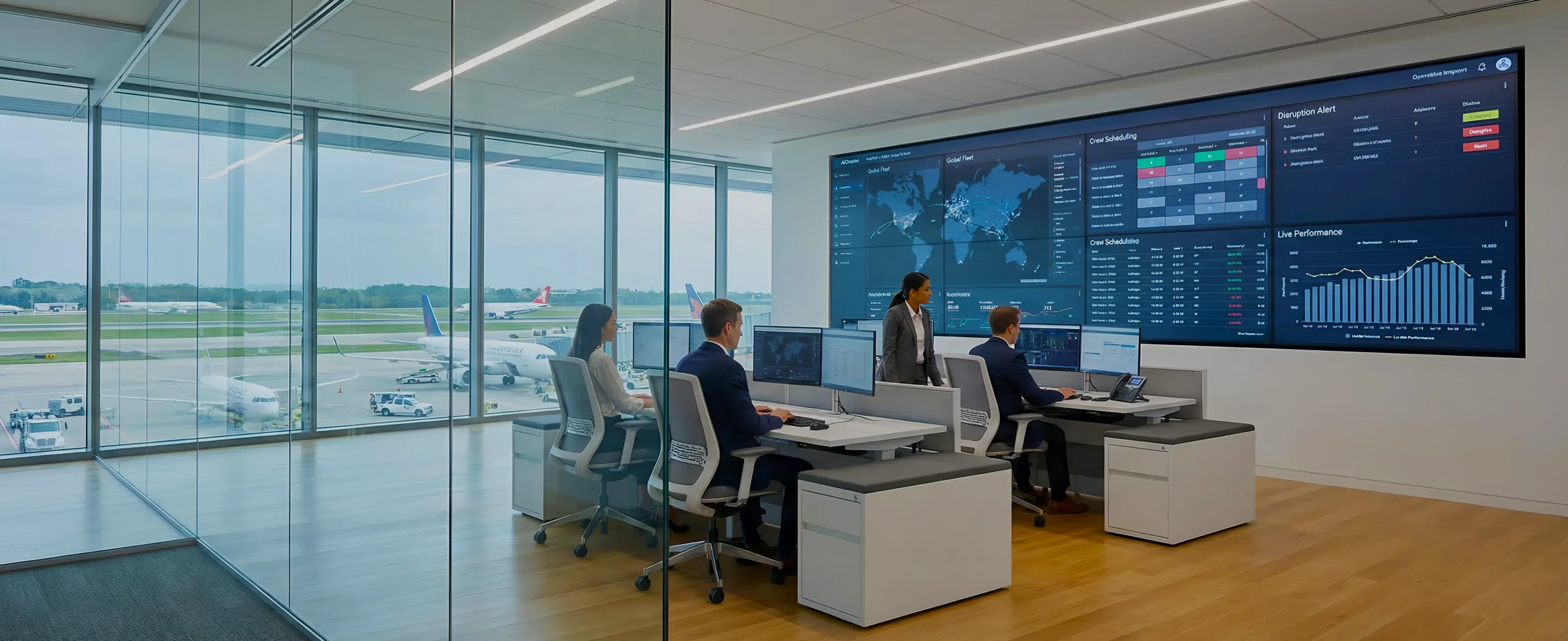
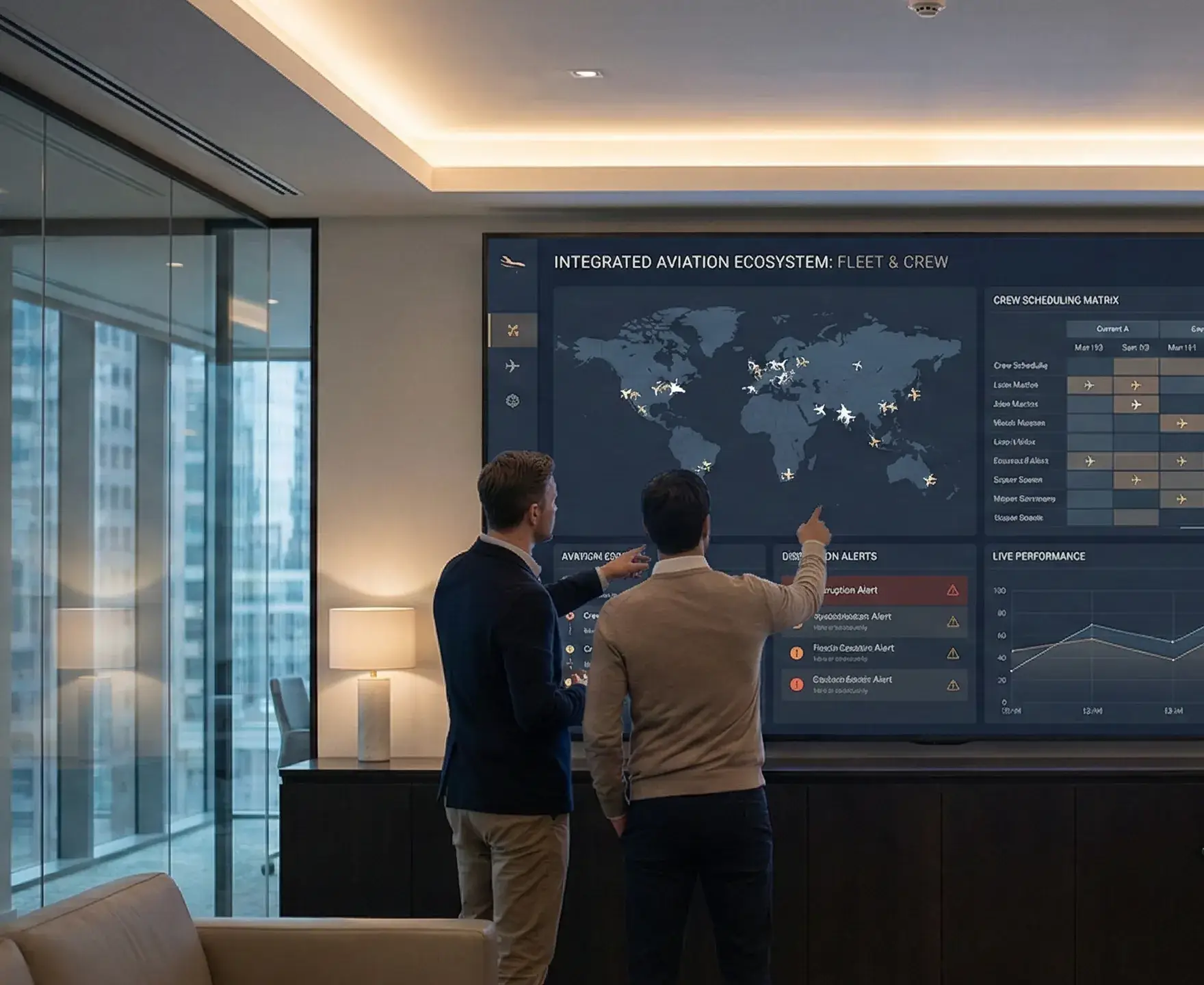
TOPS (Total Operations System) is an enterprise platform that supports airline operations by integrating fleet management, crew scheduling, operational planning, and disruption management into a unified operational environment.
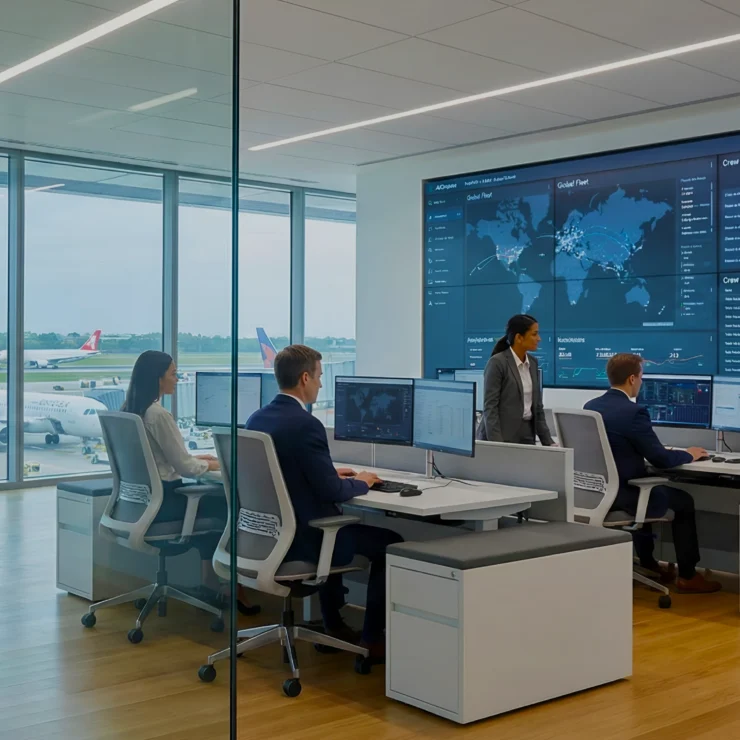
Used within the Integrated Operations Center (IOC), the platform enables multiple operational teams to coordinate aircraft, crews, schedules, and operational changes in real time.
The platform plays a critical role in helping operational teams respond quickly while maintaining efficiency and regulatory compliance.
The Business Challenge
Expanding a Mature Enterprise Platform
Unlike greenfield product development, TOPS was already an established enterprise application supporting day-to-day airline operations. As operational requirements evolved, the platform needed to support new workflows without compromising consistency or increasing complexity for experienced users.
Key Challenges
Designing for mission-critical airline operations required overcoming several interconnected complexities across data density, speed, and workflow consistency.
Managing Operational Complexity
Airline controllers manage large volumes of operational information, including aircraft movements, crew schedules, flight disruptions, legality constraints, and operational alerts. New functionality had to fit naturally within these existing workflows while minimizing cognitive load.
Maintaining Consistency
New modules needed to align with established interaction patterns and navigation structures so experienced users could adopt additional functionality without relearning the platform.
Supporting Time-Critical Decisions
Operational decisions often occur within minutes. Interfaces had to present complex operational data clearly while enabling rapid decision-making.
Translating Complex Requirements
Business requirements often involved intricate airline rules, scheduling constraints, and operational dependencies. The challenge was translating these requirements into workflows that were intuitive without oversimplifying operational complexity.
Business Objectives
The project focused on several strategic goals designed to scale platform performance while safeguarding operational resilience.
Expand Platform Capabilities
Design new operational modules supporting evolving airline requirements.
Improve Workflow Efficiency
Reduce interaction complexity while supporting operational decision-making.
Maintain Product Consistency
Ensure all new functionality aligned with existing platform standards.
Strengthen Collaboration
Support efficient communication between business analysts, designers, developers, and operational stakeholders.
Enable Future Growth
Design scalable interaction patterns that could accommodate future operational enhancements.
My Role
As UX Design Lead, I collaborated closely with business analysts, airline operations specialists, product managers, and engineering teams to design new operational capabilities for the TOPS platform.
Responsibilities
Design Approach
The process emphasized iterative collaboration, ensuring complex operational requirements were validated before implementation.
Understanding the Users
The platform supported several operational roles, each requiring different perspectives on the same operational data.
Primary Users
Each role performed different operational tasks while relying on a shared operational environment.
Designing Within an Existing Platform
One of the project's biggest challenges was extending an established enterprise product without disrupting workflows that experienced users depended upon every day.
Every new feature needed to:
This required balancing innovation with operational continuity.
From Requirements to Wireframes
Every enhancement began with detailed business requirements gathered through collaboration with business analysts and operational stakeholders.
These requirements were translated into hundreds of low- and high-fidelity wireframes exploring navigation structures, operational workflows, screen layouts, and interaction models.
Information Architecture
The application organized complex airline operations into logical task-oriented workflows.
This structure reduced navigation complexity while improving discoverability of operational tools.
UX Challenges & Solutions
Balancing complex aviation workflows with clarity and precision required deliberate interaction design strategies.
Designing for Information Density
Controllers needed access to large amounts of operational data without overwhelming the interface.
Prioritized visual hierarchy, grouping related information and using progressive disclosure to surface detail only when needed.
Supporting Situational Awareness
Operational teams required immediate visibility into changing flight and crew conditions.
Designed dashboards that emphasized critical alerts, operational status indicators, and contextual information.
Improving Workflow Efficiency
Many operational tasks required repeated navigation across multiple screens.
Streamlined interaction flows to reduce unnecessary steps and improve task completion efficiency.
Maintaining Consistency
New features had to feel like a natural extension of the existing product.
Applied consistent interaction patterns, navigation structures, and visual language throughout newly introduced modules.
System Execution & Stakeholder Engagement
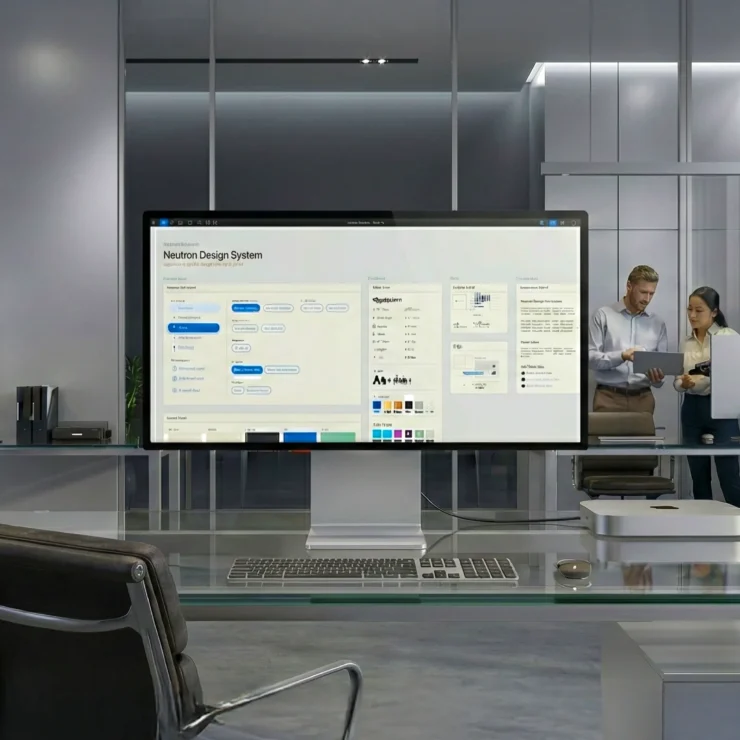
Iconography
In addition to workflow design, I created a consistent iconography system supporting airline operations. Icons were designed to communicate operational concepts quickly while maintaining clarity across information-dense interfaces.
The icon library covered navigation, aircraft operations, crew activities, alerts, scheduling, maintenance, and operational status indicators.
Interactive Prototypes
Interactive prototypes were developed to validate workflows with stakeholders before implementation.
Collaboration
The project required continuous collaboration across multiple disciplines. I worked closely with:
This iterative feedback loop ensured design decisions remained aligned with operational requirements and technical feasibility.
Working Under NDA
Due to confidentiality agreements and the secure nature of airline operations software, detailed interface designs, workflows, and product screens cannot be publicly shared.
This case study focuses on the UX process, design decisions, and enterprise design challenges rather than confidential product interfaces.
Outcomes
The initiative successfully delivered scalable improvements, reinforcing enterprise capabilities and long-term operational resilience.
Enterprise Platform Evolution
Expanded the platform with multiple new operational modules supporting evolving airline business requirements.
Improved User Experience
Simplified complex workflows while maintaining consistency across an established enterprise application.
Enhanced Collaboration
Created shared design artifacts that improved communication between business analysts, designers, and engineering teams.
Scalable UX
Established reusable interaction patterns supporting continued platform growth.
Lessons Learned
Every enhancement required balancing business requirements, technical constraints, user familiarity, and operational complexity while ensuring the platform remained intuitive for experienced users.
Reflection
Working on TOPS strengthened my understanding of enterprise UX at scale.
Rather than simplifying airline operations, the objective was to organize complex operational information into workflows that enabled confident, timely decision-making.
The project reinforced the importance of information architecture, workflow consistency, and close collaboration with domain experts when designing mission-critical enterprise software.
Skills Demonstrated
Core competencies applied across strategy, architecture, and execution throughout the TOPS platform lifecycle.
Confidential Client Engagements
Due to non-disclosure agreements, a significant portion of my most strategic work remains confidential. These enterprise-scale initiatives span the healthcare, aviation, and logistics sectors. Within these engagements, I directed the end-to-end UX for mission-critical applications, engineered highly scalable design systems, and optimized complex operational workflows.